





说明
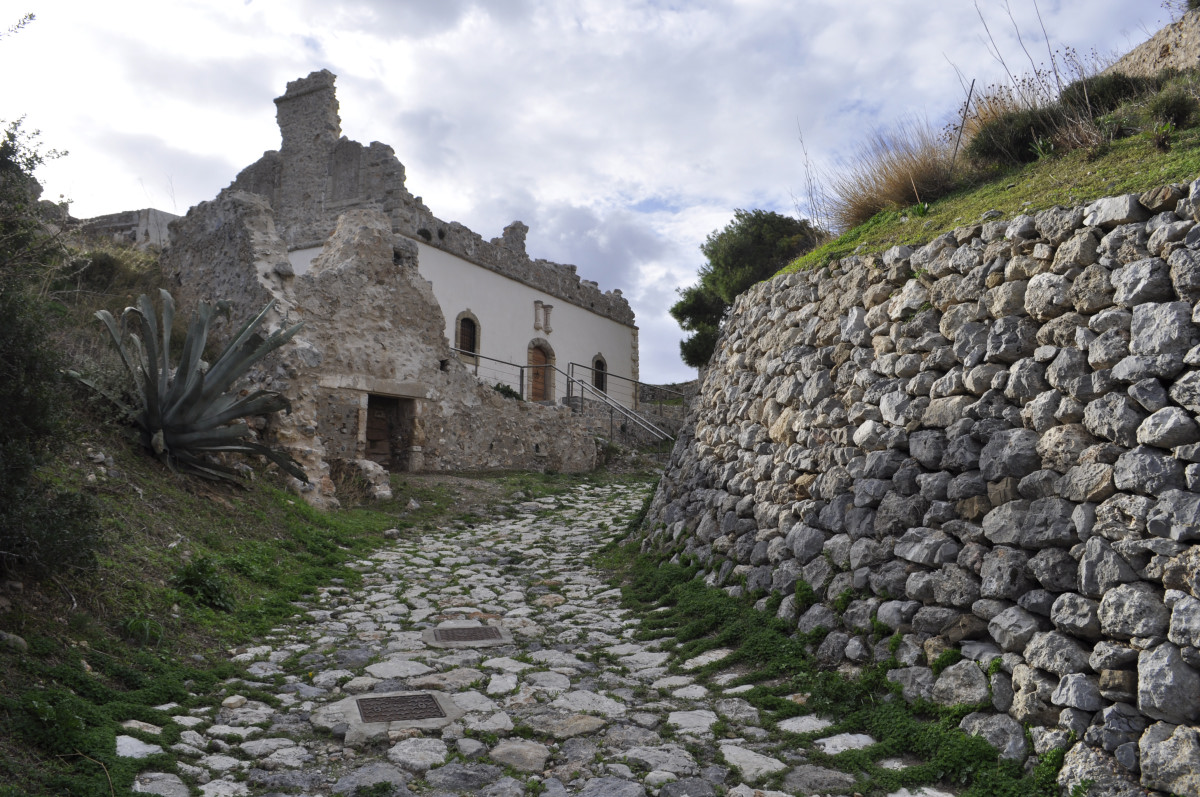
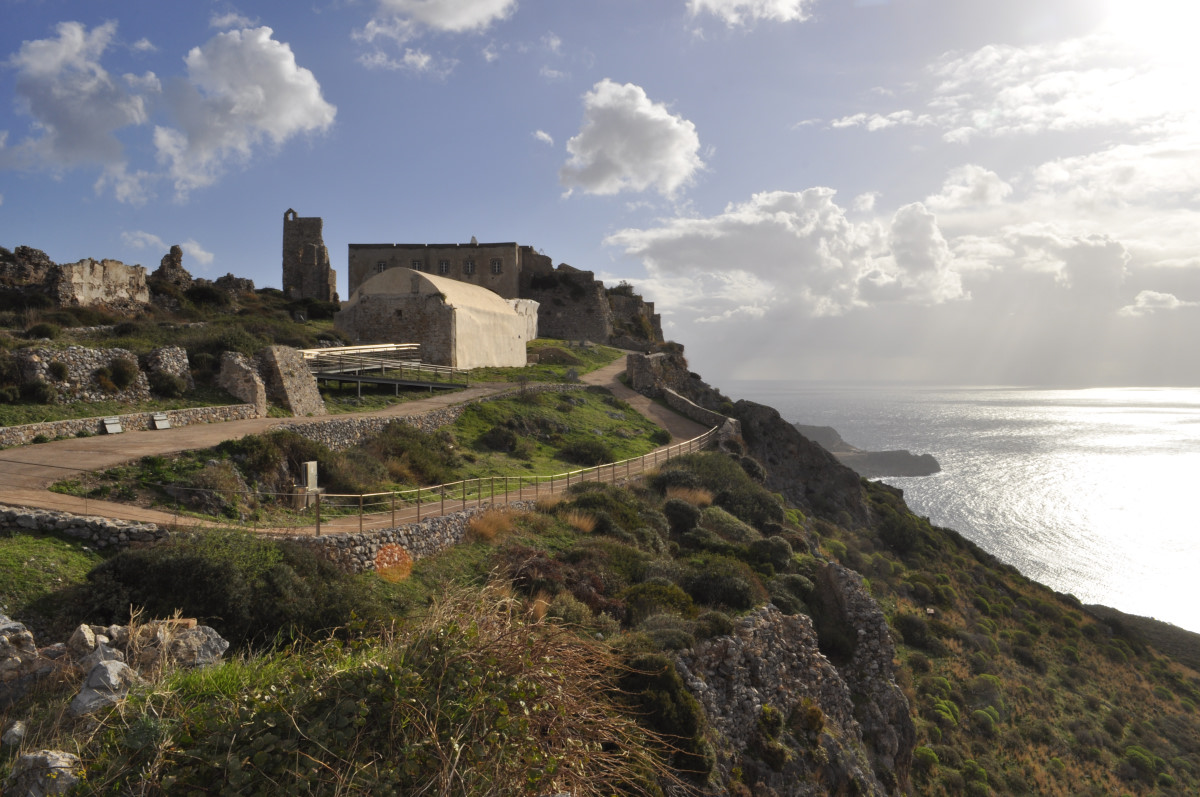
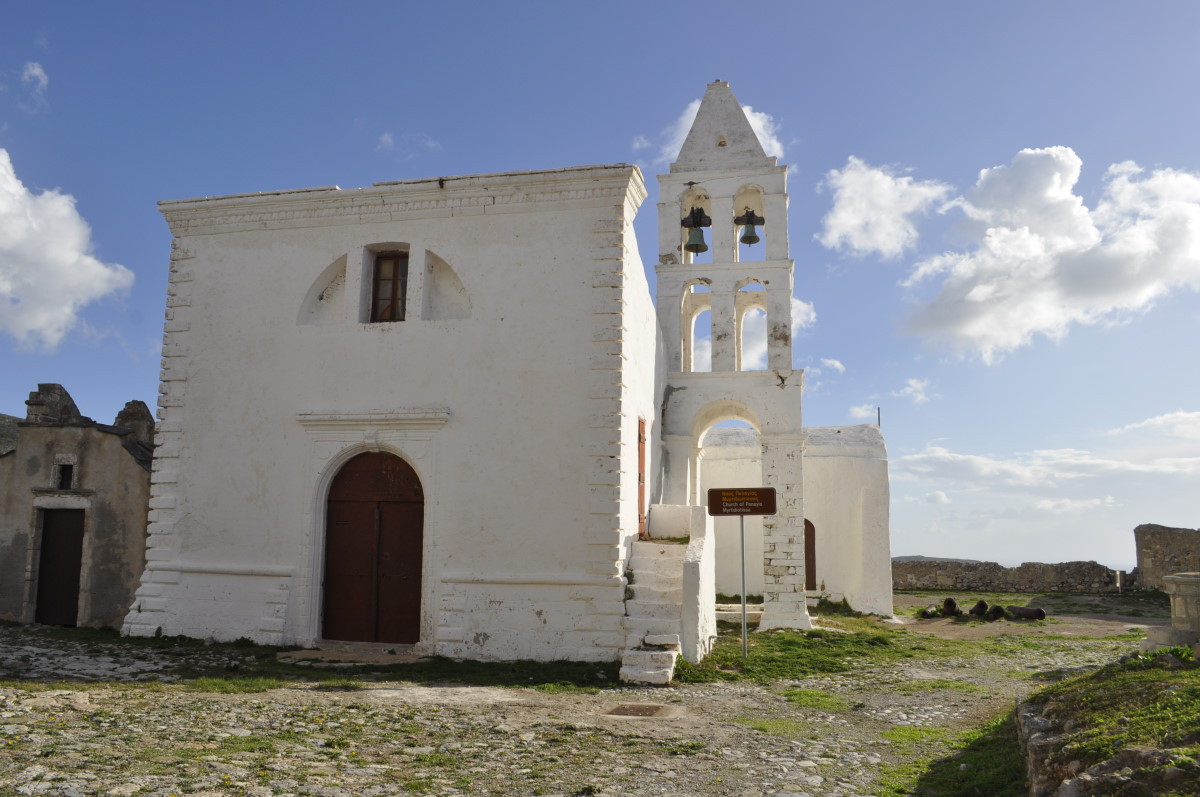
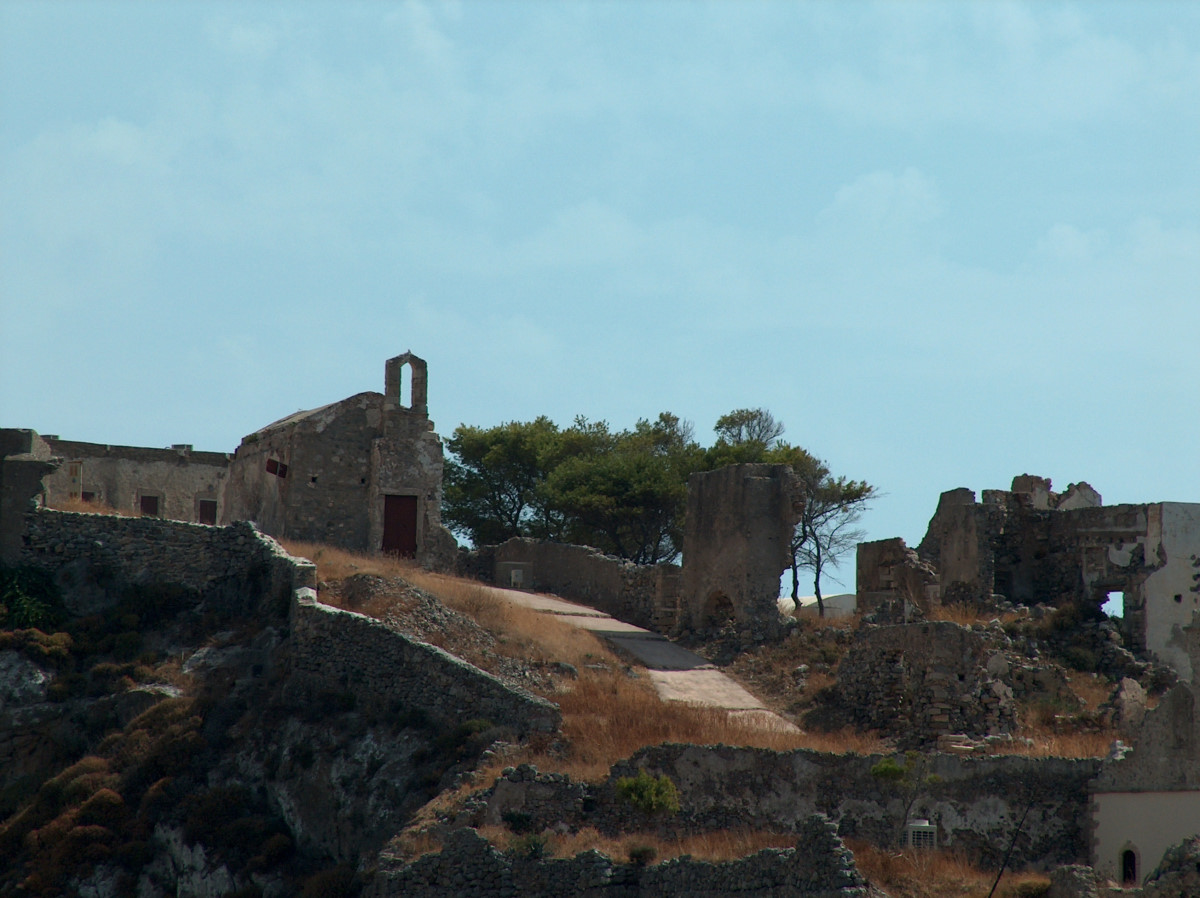
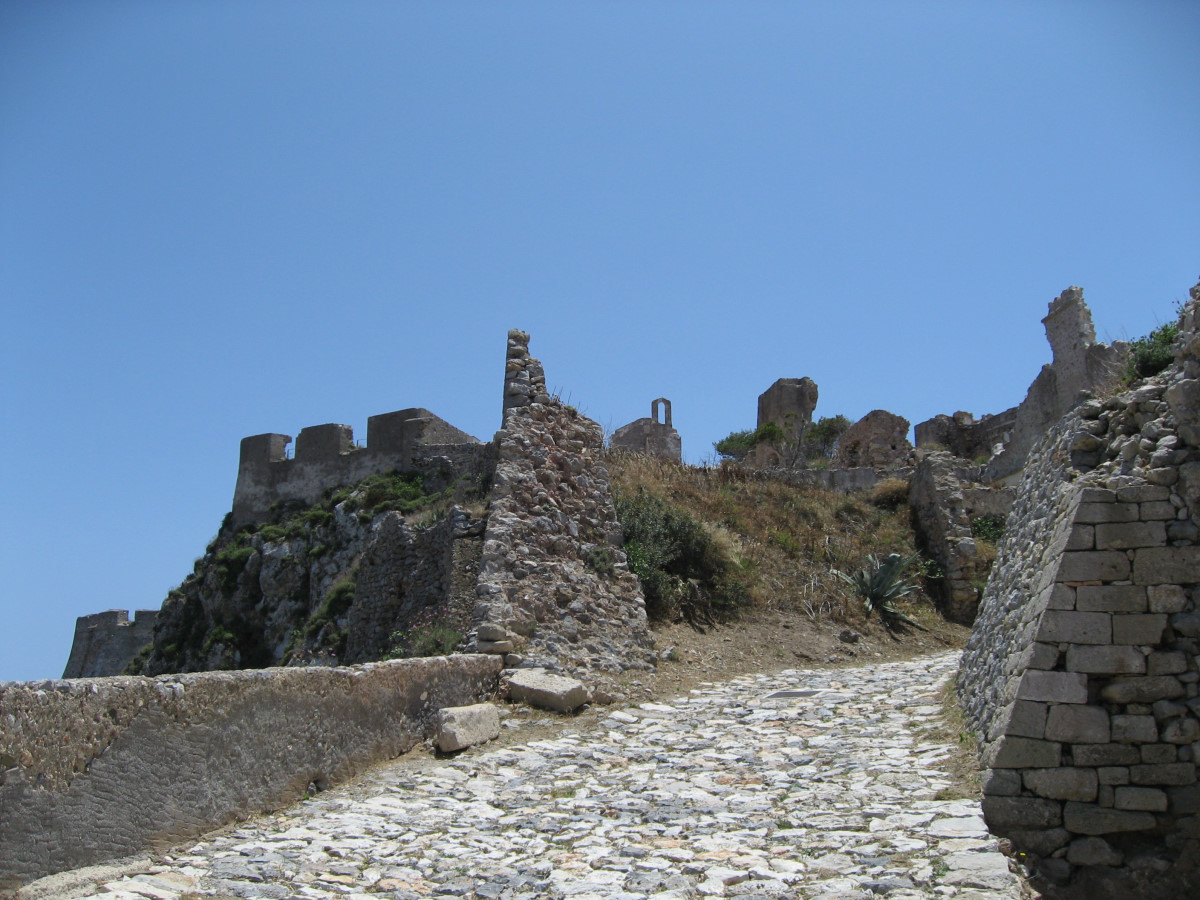
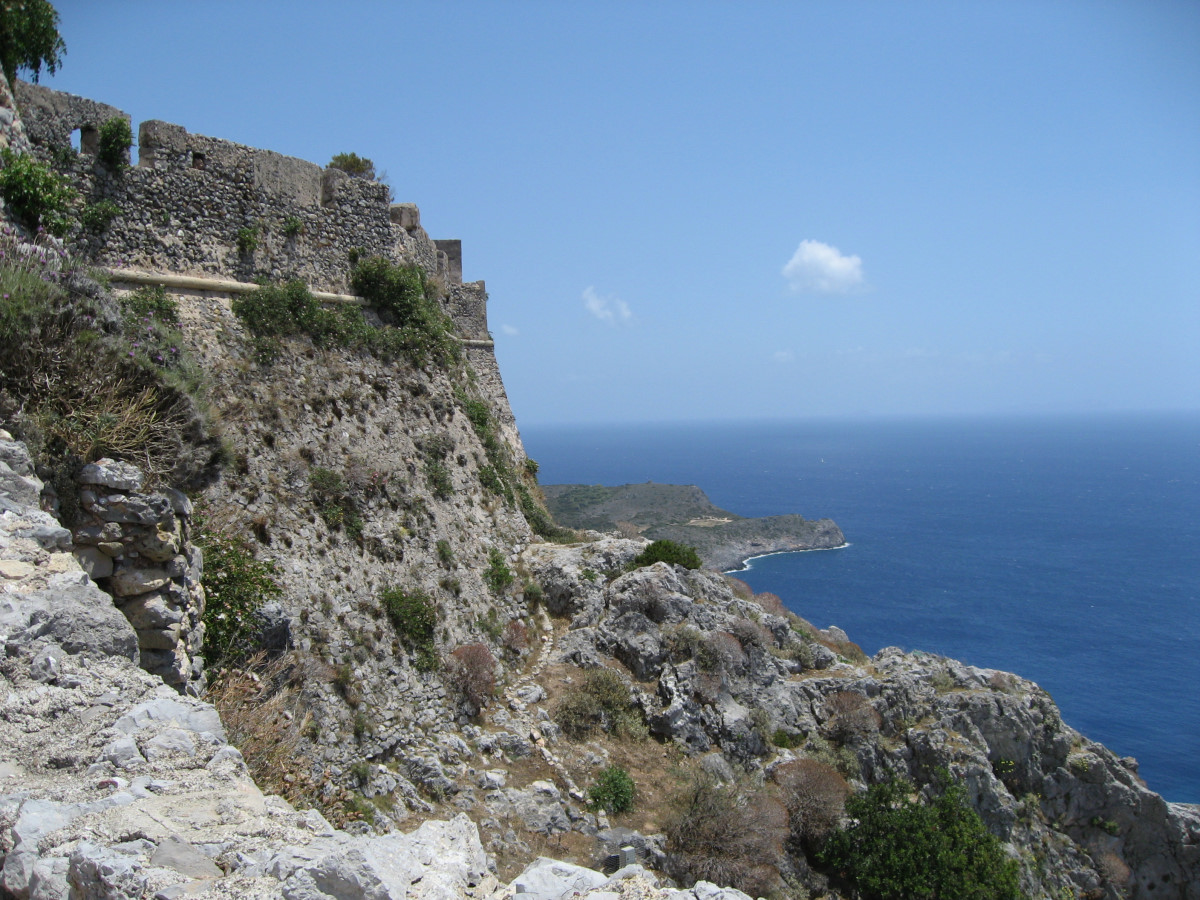
After the destruction of Paliochora in 1537, the castle of the capital city became the administrative center of the island. All political, intellectual, religious and military administration of the island was centralized in the castle, which is located in the southern part of the island, on a 200 meter high steep ridge, two kilometers from the Kapsali bay. Covering about 15 acres, it was built during the 13th century by the Venetian Venier family but fortifications were probably built earlier, during the Byzantine era. In 1503, after the Second Ottoman-Venetian War, the castle was repaired by the Venetians, in their effort to secure their remaining holdings. Its strategic location, on a natural fortress, secured control of sea traffic in the straits between Kythira and AntiKythira, between three seas, the Ionian, the Aegean and the Cretan, which is the reason why it was called the “eye of Crete” during the Venetian domination of the island. The castle was mentioned by hikers as impregnable, because of its strong fortifications and its powerful artillery. At a time when Venetians and Ottomans struggled for control over the Aegean Sea, the castle saved the island’s inhabitants numerous times. During the Third Ottoman-Venetian War, Hayreddin Barbarossa the infamous Ottoman admiral, sacked Paliochora in 1537, but failed to attack the castle of Kapsali. The castle was occupied by the Ottomans from 1715 to 1718 during the Seventh Ottoman-Venetian War, but was returned to the Venetians at the end of the war with the signing of the Passarowitz Treaty in 1718, ending the war between Austria-Venice powers and the Ottoman Empire. The Saint Marco Lion, the emblem of the Republic of Venice was located at the castle’s gate, on the western wall. It was destroyed by the French in 1797, along with the coat of arms on the other houses that belonged to nobility. The castle remained in the hands of Venice until 1797, when it was passed over to the French with the Campo – Formio Treaty (October 17th, 1797), along with the other Ionian Islands. The French, along with the bourgeois and the farmers burned the “Libro d’ Oro”, the book of nobility and established a new bourgeois society of Kythira in the Estavromenos Square. In 1797, they planted the tree of Eleftheria (Liberty) in the Estavromenos Square and proclaimed “Liberté, egalité, fraternité”, the national motto of France adopted during the French revolution. The castle of Kythira Town was occupied by the Russo-Ottoman alliance from September 1798 to March 21st, 1800. With the Treaty of Constantinople, Ottomans and Russians agreed then to create the Septinsular Republic, as a semi-autonomous state, under their protection. With the Tilsit Treaty in July 1807, the Russians handed over control of the islands to Napoleon’s France. In 1809, the French again lost the islands, this time to the British. The British had complete control of the islands by 1814, and proceeded to found the autonomous United States of the Ionians Islands in 1815, as a protectorate of Great Britain (Paris Treaty 20th November, 1815). At that time, the castle counted 200 permanent inhabitants. British influence over the Ionian Islands ended in May 21st, 1864, when the island were incorporated into the liberated Greek state. The castle was continuously inhabited in the following years, until the German occupation during World War II, when it was occupied by German troops. The castle is made of the main fortification and another site in the northern side with a second fortification that includes the Mesa settlement or Kleisto Bourgo (Borgo Serato). The Governor’s palace is located on the eastern edge of the castle and it was the residence of the Venetian governor and later the British High Commisionner. The castle had a prison and the garrison headquarters, the large Venetian vaulted tank, the houses of the nobles, the powder house and ancillary buildings. In various locations one can see large cannons, dating back to the Venetians, the Russo-Ottomans and the British. Today, the Governor’s palace harbors the Historical Archive of Kythira, one of the most important in Greece, with documents dating back to the 16th century. The castle also includes the churches of Panagia Myrtidiotissa or Kastrini, of Panagia Orfani, of Pantokratoras and of Saint John. The church of Panagia Myrtidiotissa or Kastrini was built in the 16th century and was the catholic church of Panagia ton Latinon until 1806, when it was turned into an orthodox church. The church harbored the sacred icon of the Virgin Mary for about two centuries (from November 1682), and protected it from pirate raids. From 1842, the icon was returned to Iero Proskynima (where it is to this day) and was replaced with a copy in the castle’s church in 1844. On the northern wall of the church, there is the Panagia Orfani church, which belongs to the abbey of Panagia Agkarathos of Heraklion of Crete. It was looked after by the Kallona family. The chapel included the relics of the famous monk Agkarathos of Heraklion of Crete for 300 years, after Crete fell to the Ottomans. 16th and 18th century frescos can be seen in the Pantokratoras church built in 1545. One can see Byzantine and post-Byzantine churches, with magnificent frescos in the settlement of Mesa or Kleisto Bourgo. Of the 14 churches mentioned by historical sources, most are preserved in a very good state. Yellow immortal flowers grow at the outskirts of the castle.
地点
乔拉基蒂拉岛
添加评论