


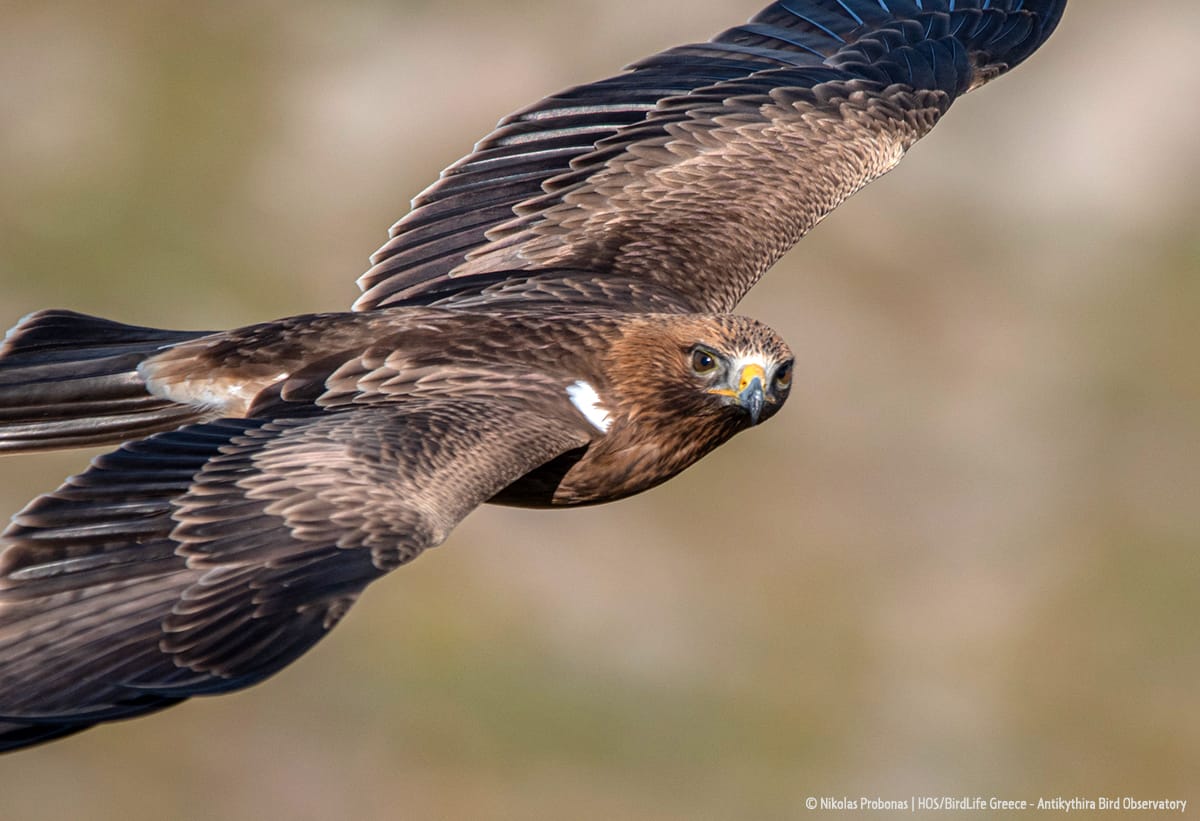
Kythera, the island of Aphrodite, is not just a destination for emerald waters and traditional stone villages. For nature enthusiasts, it represents one of the most critical “transit stations” in the cycle of life. Positioned at the southernmost tip of the Balkan Peninsula, Kythera acts as a natural bridge between Europe and Africa, providing sanctuary to millions of birds during their arduous migratory journeys.
The island, along with the neighboring islet of Antikythera, has been designated as an Important Bird Area (IBA). Here, birdwatching is not merely a hobby; it is an immersive experience in the “theater of nature.” In an environment where human intervention remains minimal, observers can discover the rare beauty of winged travelers in their pristine habitats.
What You Will See
Dozens of species have been recorded on the island, some of which are considered the “Holy Grail” for dedicated birdwatchers:
- Birds of Prey: The majestic Short-toed Snake Eagle, the Marsh Harrier, and the Honey Buzzard frequently soar through the island’s thermals.
- The Cliff-Dwellers: The impressive Eleonora’s Falcon (Falco eleonorae), which nests on the rugged precipices, and the Blue Rock Thrush with its melodic song.
- Seabirds: Along the coastlines and the iconic Hytra islet, you will encounter the rare Audouin’s Gull and the European Shag.
- Migratory Gems: During spring and autumn, the fields come alive with Hoopoes, Golden Orioles, European Rollers, and vibrant Bee-eaters.
Prime Birdwatching Spots
- Myrtidiotissa Monastery (West): The slopes surrounding the monastery offer excellent vantage points for spotting raptors and scrub-land species.
- Airport Area (Central): The open plateaus and fields are favorite stopover points for birds seeking food and rest during migration.
- Hytra Islet: A boat trip to the “Egg” of Kythera brings you close to large colonies of nesting seabirds and falcons.
- Southern and Southeastern Coasts: Ideal locations to witness birds at the exact moment they arrive from or depart for the African continent.
Tips for the Visitor
- Gear: A good pair of binoculars and a Mediterranean field guide are essential.
- Ethics: Observation requires silence and discretion. Never disturb nesting sites and always follow the “Leave No Trace” principle.
- Timing: Spring (April-May) and Autumn (September-October) are the peak periods for diversity and sheer numbers of birds.
In Kythera, every glance at the sky is a new discovery. Whether you are a seasoned “twitcher” or a casual nature lover, birdwatching on the island will offer you a profound sense of peace and wonder for the natural world.
More info:
https://ornithologiki.gr/
Kythera & Antikythera: A Journey to Europe’s Migratory “Hotspot”
The geographical position of Kythera and Antikythera makes them one of the most significant European corridors for migratory birds. Every autumn, thousands of birds cross the Balkans, using these islands as the final “stepping stone” before the long crossing to Africa. The same phenomenon occurs in spring, during the return journey to the North.
Conservation Status
Both islands are part of the NATURA 2000 network and are designated as Important Bird Areas (IBA GR129, GR130). Notably, on Antikythera, the Antikythera Bird Observatory (ABO) has been operating since 1997 by the Hellenic Ornithological Society, serving as a hub for raptor monitoring and bird ringing.
Birdwatching Checkpoints
| Location | Island | What to Look For |
| Lighthouse (North) | Kythera | Peregrine Falcons nesting in the cliffs. |
| Diakofti Port | Kythera | Colonies of Audouin’s Gulls nearby. |
| Airport Fields | Kythera | Harriers, Short-toed Eagles, and Red-footed Falcons during migration. |
| Palaiopoli / Avlemonas | Kythera | Audouin’s Gulls and Mediterranean Shags along the coast. |
| Myrtidiotissa Monastery | Kythera | Short-toed Eagles, Peregrine Falcons, and the rare Lanner Falcon. |
| Plagara (Highest Peak) | Antikythera | The best vantage point for raptor watching. |
| Karavostasi | Antikythera | Home to one of the largest Eleonora’s Falcon colonies in the world. |
Highlight Species Table
Depending on the season of your visit, you can encounter different categories of birds:
| Species | Status | Season / Notes |
| Eleonora’s Falcon | Summer Visitor | Breeds in massive numbers on Antikythera. |
| Bonelli’s Eagle | Resident | Known on Antikythera by the local name “Manolis.” |
| Honey Buzzard | Passage Migrant | Over 1,800 individuals have been recorded in a single season. |
| Audouin’s Gull | Summer Visitor | Rare species nesting on offshore rocky islets. |
| Lanner Falcon | Resident | A rare raptor that attracts birdwatchers from all over Europe. |
| European Bee-eater | Passage Migrant | Colorful birds passing in large, vocal flocks. |
| Golden Oriole | Passage Migrant | Frequent in spring, often spotted in the Observatory’s garden. |
Beyond Birdwatching
The islands hide other treasures for the nature lover:
Flora: The endemic tulip Tulipa goulimyi found on Antikythera.
Marine Life: The sea between Kythera and Crete is a known passage for Sperm Whales.
Reptiles: The rare Pori Wall Lizard (Podarcis levendis), discovered on the rocky islets of Lagouvardos and Pori.
Extra Tip: If you visit Antikythera during spring or autumn, you can join the Hellenic Ornithological Society’s Volunteer Programme to participate in bird ringing and raptor monitoring!